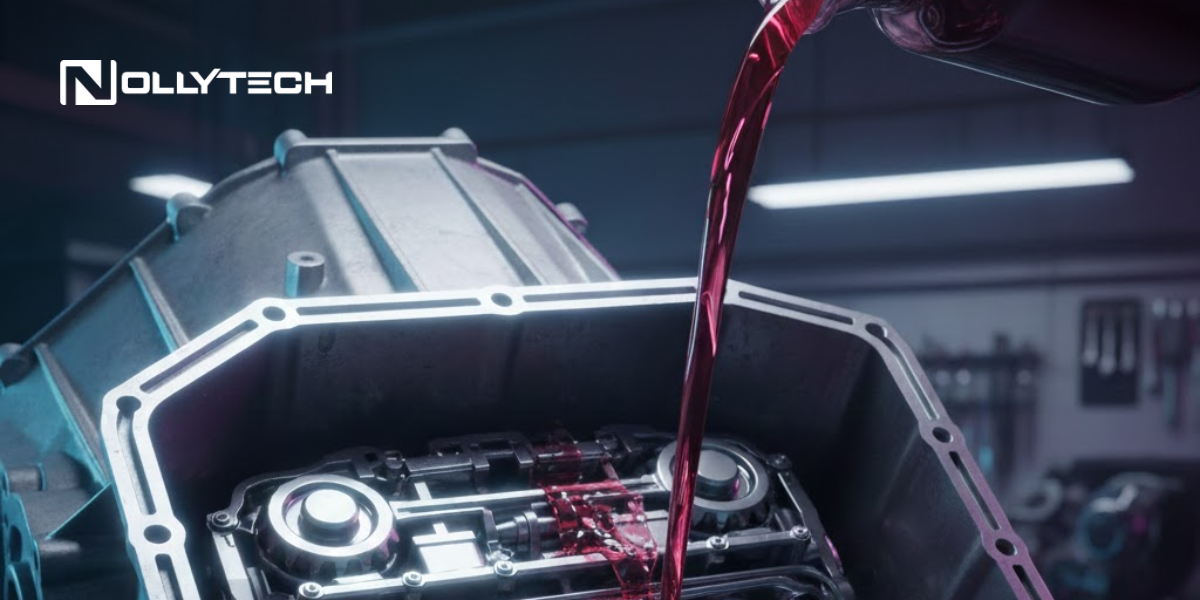
Your diesel engine’s oil pressure warning light just illuminated. In that moment, you’re potentially minutes away from transforming a million-mile capable powerplant into expensive scrap metal. While modern diesel engines routinely achieve remarkable lifespans with documented cases exceeding 2.6 million miles, inadequate oil pressure remains the leading cause of catastrophic engine failure.
This comprehensive guide examines the seven primary causes of low oil pressure in diesel engines. Whether you’re a DIY mechanic or professional technician, you’ll discover the technical depth and practical solutions needed to protect your diesel investment.
Why diesel engine oil pressure matters more than you think
Your diesel engine operates under significantly higher pressures than gasoline counterparts. You need 15-80 PSI during normal operation compared to 20-60 PSI in gas engines.
This increased demand stems from several factors:
- Higher compression ratios
- Greater bearing loads
- Piston cooling jets in heavy-duty applications
Your oil pressure system functions through positive displacement pumps creating volumetric flow. The actual pressure develops from resistance through bearing clearances and oil galleries.
Critical pressure thresholds you must know
Your pressure requirements vary by application:
Light-duty diesels: 10-25 PSI at idle, 40-60 PSI during operation Heavy-duty commercial engines: 15-30 PSI at idle, 50-80 PSI at rated RPM
When your pressure drops below 5 PSI at idle or 10 PSI during operation, you must shut down immediately to prevent catastrophic damage.
1. Insufficient motor oil: The silent engine killer
Your most common cause of low oil pressure is simply not having enough oil. When your oil level drops below the pickup tube, your pump begins drawing air instead of oil. This creates cavitation, where aerated oil loses 50-80% of its lubricating effectiveness.
The relationship between oil volume and pressure
Your oil volume directly affects pressure maintenance. Insufficient oil prevents your pump from maintaining pressure against normal bearing clearances of 0.001-0.003 inches.
Understanding oil capacity requirements:
Different diesel engines have vastly different oil capacity needs:
- 6.7L Cummins: 12 quarts with filter change (10 quarts in 2019+ models)
- Detroit Series 60: 32-36 quarts
- Normal consumption: 0.1-0.2% of fuel consumption in modern diesels
- High-mileage engines: up to 0.5% consumption rate
The critical consequences you face
Running low on oil creates multiple threats to your engine:
Immediate bearing damage: Your protective oil film is normally just 0.00002 inches thick. When this breaks down, metal-to-metal contact occurs within minutes.
Cooling system failure: Your oil provides approximately 40% of engine cooling. Insufficient levels create a double threat to engine longevity.
The bottom line: checking your oil level regularly isn’t just maintenance, it’s engine survival.
2. Engine oil contamination: The hidden pressure destroyer
Contamination silently attacks your oil’s ability to maintain proper pressure and protection. Four primary contaminants threaten your diesel engine, each with specific effects on your lubrication system.
Fuel dilution: Your modern diesel’s biggest threat
Fuel dilution represents your most common contamination issue, especially in modern diesels with DPF regeneration cycles.
Here’s what you need to know:
- Acceptable limits: below 3.4% by weight
- Post-injection during regeneration: can push dilution to 8-12%
- Impact: reduces oil viscosity by 10-25%, directly affecting pressure
Your fuel dilution occurs when unburned diesel fuel mixes with your engine oil. Modern emissions systems make this more common through post-injection events during DPF regeneration.
Soot loading in EGR-equipped engines
Soot loading presents unique challenges if you have EGR-equipped diesels:
- Normal levels: 2-4% by weight
- Critical levels: above 6%
- Risk factors: excessive idling, incomplete combustion
Modern EGR systems produce more agglomerating soot particles that increase viscosity and accelerate wear. This contamination particularly affects engines with excessive idling.
Coolant contamination: The engine killer
Coolant contamination proves especially destructive to your engine:
- Warning signs: sodium or potassium levels above 30 ppm
- Effects: glycol forms corrosive acids and oil “balls” that block passages
- Industry data: causes approximately 50% of catastrophic diesel failures
Metal particles: Evidence of internal wear
Metal particles in your oil provide direct evidence of internal wear:
- Iron above 200 ppm: indicates cylinder wear
- Chromium over 20 ppm: suggests ring damage
- Copper exceeding 100 ppm: points to bearing deterioration
Regular oil analysis costs just $15-40 per sample but enables early detection before pressure problems develop.
3. Clogged oil filter: When protection becomes restriction
Your oil filter includes a bypass valve designed to open at specific pressure differentials, typically 8-15 PSI for diesel applications. When your filter becomes clogged, this valve allows unfiltered oil to circulate rather than starving your engine.
However, operating with bypassed filtration accelerates wear and contamination buildup in your system.
Filter maintenance intervals you should follow
Your maintenance intervals vary by application:
- Light-duty diesels: every 7,500-15,000 miles
- Heavy-duty applications: 25,000-50,000 miles
- Severe service conditions: reduce intervals by 50%
Modern CK-4 oils enable longer drain intervals but may require more frequent filter changes due to increased contaminant holding capacity.
Understanding filter performance ratings
Premium filters offer significant advantages:
- Synthetic media filters: 3-5 times more surface area than standard filters
- Beta ratings indicate efficiency: β20=10 filter captures 90% of 20-micron particles
- Bypass filters: achieve β2=200, capturing 99.5% of 2-micron particles
The first 10% of your drain interval typically generates 30% of total contamination, making early filter performance critical for your engine protection.
4. Oil viscosity problems: The temperature-pressure relationship
Your oil viscosity directly impacts pressure generation and maintenance. Understanding this relationship helps you select the right oil grade and avoid pressure-related failures.
Common diesel oil grades and their applications
Diesel engines primarily use these viscosity grades:
- 15W-40 conventional: Most common for standard applications
- 5W-40 synthetic: Better cold-weather performance
- 0W-40 full synthetic: Extreme temperature applications
Each grade serves specific operational requirements based on your climate and engine design.
How temperature affects your oil pressure
Temperature creates dramatic effects on your oil pressure system:
Cold oil conditions:
- Oil thickens, initially showing high pressure
- Restricts flow to critical components
- Can cause pump cavitation with wrong grade
Operating temperature (210°F/99°C):
- Oil reaches optimal viscosity for pressure maintenance
- Best protection and flow characteristics
High temperature (above 225°F):
- Requires higher viscosity grades to prevent bearing damage
- Thin oil causes film breakdown and pressure loss
Selecting the right viscosity for your application
Wrong grade selection has immediate consequences:
- Too-thin oil: causes film breakdown and pressure loss
- Too-thick oil: creates poor cold-start lubrication and potential pump cavitation
Multi-grade oils employ viscosity index improvers (VII) that expand with heat to maintain protection. Modern CK-4 formulations resist shear-induced viscosity loss better than older specifications.
FA-4 oils offer fuel economy benefits but require OEM approval due to lower high-temperature high-shear (HTHS) viscosity of 2.9-3.2 cP compared to CK-4’s minimum 3.5 cP.
5. Engine wear: When clearances spell disaster
As your engine accumulates miles, normal wear increases bearing clearances. This wear directly affects your oil pressure system’s ability to maintain proper pressure.
Understanding normal bearing clearances
Your bearing clearances should measure:
- Normal range: 0.0020-0.0025 inches for most diesel applications
- General rule: 0.001 inch per inch of journal diameter
- Service limits: typically 0.005 inches before requiring attention
How wear affects oil pressure
As wear progresses, increased clearances allow oil to escape faster than your pump can supply, resulting in pressure loss.
Wear patterns vary by component:
- Main and rod bearings: show edge wear from journal flexing
- Camshaft bearings: experience accelerated wear from inadequate oil supply
Modern high-capacity oil pumps can mask early wear signs. This makes pressure mapping at multiple RPM points essential for accurate diagnosis.
Mileage expectations and wear rates
Your bearing life varies dramatically based on maintenance quality:
- Poor maintenance: under 50,000 miles
- Good maintenance: over 200,000 miles
- Synthetic oils: significantly reduce wear rates
- Contamination: accelerates deterioration
Oil analysis revealing iron levels above 150 ppm indicates abnormal wear requiring your immediate investigation.
6. Faulty oil pressure gauge: False alarms and missed warnings
Your oil pressure sensors fail in predictable patterns, potentially creating dangerous false readings that mask real problems or cause unnecessary panic.
Types of oil pressure sensors in your diesel
Single-wire sensors:
- Operate as simple switches
- Typically close at 3.5-11 PSI
- Either on or off, no variable reading
Variable resistance sensors:
- Should read approximately 75 ohms with engine off
- Change to 40-75 ohms at operating pressure
- Provide graduated pressure readings
Three-wire sensors:
- Use 5V reference voltage
- Output varies from 1.3V at 0 PSI to 4.9V at 100 PSI
- Most accurate for modern diesel applications
Common sensor failure modes you’ll encounter
Your pressure sensors fail through several mechanisms:
- Oil passage blockage from debris or improperly applied Teflon tape
- Internal sensor element failure creating open or short circuits
- Wiring issues causing erratic readings
Diagnostic procedures for sensor testing
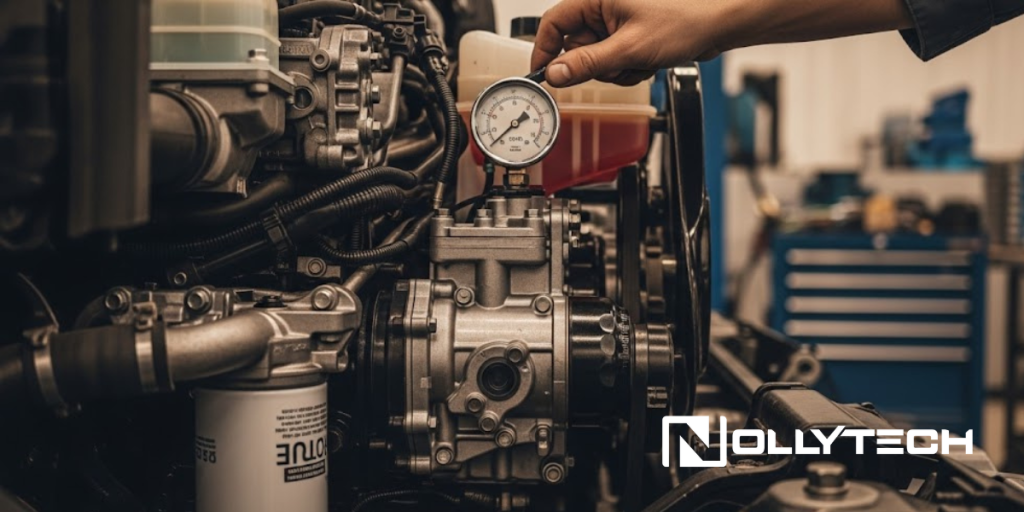
You need mechanical gauge verification for accurate diagnosis:
If mechanical pressure reads normal while electrical gauge shows low pressure: sensor replacement is indicated.
P0520/P0521 diagnostic codes: indicate oil pressure sensor circuit malfunctions requiring professional testing of continuity, resistance values, and voltage signals.
Many operators make the critical mistake of trusting electronic gauges without mechanical verification, potentially missing genuine pressure problems until catastrophic failure occurs.
7. Faulty oil pump: The heart of your system fails
Your oil pump represents the heart of your lubrication system. When it fails, you have minutes before catastrophic engine damage occurs.
How oil pumps fail in diesel engines
Your oil pump fails through several mechanisms:
- Gear wear creating excessive clearances
- Pressure relief valve sticking (causing either constant bypass or over-pressurization)
- Housing wear allowing internal leakage
Contamination remains the primary cause, with metal particles and sludge accelerating component damage.
Types of oil pumps in modern diesels
Gear pumps: Dominate heavy-duty applications
- Offer 85-95% efficiency
- Pressure capabilities to 3,000 PSI
- Most reliable for commercial use
Gerotor pumps: Common in automotive applications
- Provide quieter operation
- Good for light-duty diesels
Variable displacement pumps: Emerging technology
- Reduce parasitic losses by 2-5%
- ECM-controlled output matching engine demands
Testing and replacement considerations
Your testing requires comprehensive pressure mapping across the RPM range at full operating temperature.
Typical specifications:
- 30-60 PSI during normal operation
- Maximum pressure limited by relief valves set at 100-150 PSI
When your rebuild costs approach 70% of replacement price, new pump installation proves more economical, especially considering warranty benefits.
Diagnostic procedures and preventive strategies
Effective diagnosis of your oil pressure problems follows a systematic approach that can save you thousands in unnecessary repairs.
Step-by-step diagnostic process
Step 1: Begin with mechanical pressure gauge verification at your oil pressure sensor port
Step 2: Compare readings to manufacturer specifications across the RPM range
Step 3: If pressure reads below specification with adequate oil level, internal problems require component testing
Cost-effective preventive maintenance
Your preventive maintenance proves dramatically cost-effective:
Oil analysis programs:
- Cost: $15-40 per sample
- Enable condition-based maintenance
- Documented ROI of 3:1 to 5:1 through avoided failures
Premium synthetic oils:
- Cost 20-30% more than conventional oils
- Can extend drain intervals to 25,000 miles
- Provide superior protection and pressure maintenance
Learning from million-mile success stories
Million-mile diesel engines share common characteristics that you can apply:
Jerry Pruett’s Kenworth: Achieved 1.6 million miles using synthetic oil with 25,000-mile intervals
Howard Clayton’s Dodge Ram: Reached 2.6 million miles through disciplined 10,000-mile changes
These success stories demonstrate that proper oil pressure management transforms expected engine life from 500,000 miles to well over one million.
Advanced monitoring and future technologies
Modern technology offers unprecedented opportunities to monitor and protect your diesel engine investment.
IoT monitoring systems
Real-time monitoring systems provide:
- Continuous pressure tracking
- Predictive failure analysis
- Remote diagnostics capability
Benefits for different operators
Fleet operators: Implementing comprehensive oil analysis and real-time monitoring systems provides competitive advantages through:
- Reduced downtime
- Lower total ownership costs
- Predictive maintenance scheduling
Individual operators: Benefit from:
- Mechanical pressure gauge installation
- Premium synthetic oils
- Disciplined maintenance schedules
The bottom line on protecting your diesel investment
Low oil pressure represents a critical threat requiring your immediate attention. Whether you’re facing a $120-350 sensor replacement or a $20,000-40,000 engine rebuild, early detection and proper diagnosis make the difference between minor repairs and catastrophic failure.
Your action plan for oil pressure protection
- Install a mechanical oil pressure gauge for reliable monitoring
- Implement regular oil analysis to catch problems early
- Use premium synthetic oils for maximum protection
- Follow disciplined maintenance schedules based on your operating conditions
- Address pressure warnings immediately to prevent catastrophic damage
The future of diesel engine monitoring
As the diesel industry evolves toward more sophisticated monitoring systems, you’ll benefit from understanding and addressing oil pressure fundamentals. Those who master these basics will achieve the remarkable longevity these engines can deliver.
Remember: in the world of diesel engines, oil pressure equals engine life. The few hundred dollars you invest in proper maintenance and monitoring can prevent tens of thousands in repairs while ensuring your diesel engine joins the million-mile club rather than the scrapyard.
Your diesel engine represents a significant investment. By understanding these seven causes of low oil pressure and implementing proper monitoring and maintenance strategies, you’re positioning yourself for years of reliable, efficient operation. Don’t wait for warning lights, take proactive steps today to protect your diesel investment.